Luxury Hotel Furniture shapes a guest’s first impression before the room service arrives. A deep armchair, a steady bedside table, and a drawer that closes quietly all communicate care. Yet appearance alone is not enough. Furniture must withstand frequent use, support restful stays, and remain practical for housekeeping teams.
Market conditions make those choices consequential. STR’s 2023 year-end U.S. hotel report recorded 63.0% occupancy and an average daily rate of $155.62 across the market. Those figures cover hotels broadly, not luxury properties alone. Still, they underline the commercial setting in which operators make design and investment decisions. The 2024 J.D. Power North America Hotel Guest Satisfaction Study also evaluates satisfaction across multiple parts of the guest experience. It does not prove that a particular chair raises satisfaction. That distinction matters.
Furniture designer Charles Eames captured the value of careful execution: “The details are not the details. They make the design.” For hotel buyers, those details include upholstery that cleans without looking clinical, joinery that stays firm, and finishes that resist scratches near luggage. A beautiful sample can disappoint after a busy season. Sometimes, the less dramatic choice lasts longer. This guide explores how to assess style, materials, comfort, durability, customization, and supplier reliability when choosing Luxury Hotel Furniture. The goal is not a showroom-perfect room. It is a room that still feels considered after hundreds of check-ins.
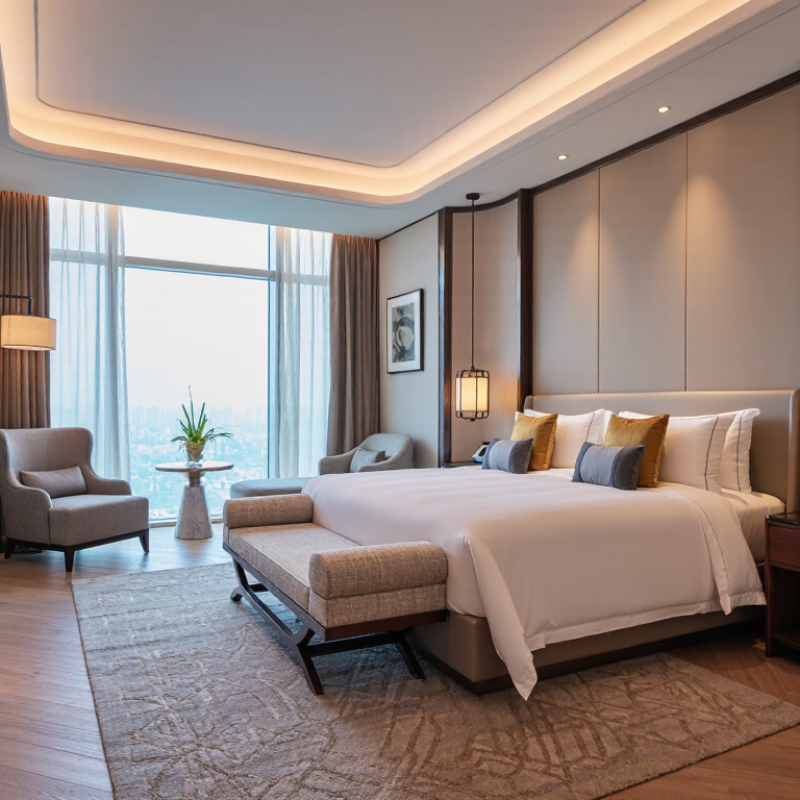
Luxury hotel furniture is not simply expensive furniture. It is the beds, chairs, desks, wardrobes, and tables selected to support comfort, function, and a coherent sense of place. Quality shows in practical details: a bedside table within easy reach, drawers that glide quietly, and upholstery that feels pleasant against the skin. Guests notice these details, often without naming them.
The J.D. Power 2024 North America Hotel Guest Satisfaction Index Study surveyed 39,219 hotel guests and reported an overall satisfaction score of 701 out of 1,000. Its measures include guestroom quality and condition, reinforcing the importance of what guests encounter in their rooms. Furniture contributes to that impression: a supportive chair can make a workday easier, while a sagging mattress can undermine an otherwise polished stay. Comfort is felt.
Materials and layout matter as much as appearance. A marble-topped table may look impressive, yet feel cold beside a warm reading lamp and textured fabric. Staff also need pieces that withstand frequent cleaning and daily use. Still, durability alone does not create luxury. A room can be orderly and resilient, but oddly impersonal; that tension deserves attention when choosing furnishings.
Luxury hotel furniture should respond to the space, not simply fill it. Measure room dimensions, door swings, lift access, and the clear paths guests and staff use every day. A broad armchair may look elegant in a plan but block a balcony door in practice. Measure twice. Check how daylight falls across seating and whether guests can reach bedside tables without stretching.
Guest needs vary by room type and length of stay. In a suite, a supportive lounge chair and a sturdy work surface can make time indoors more comfortable. In a compact room, a slim desk and luggage bench may serve guests better than oversized decorative pieces. Families may need rounded table edges and flexible seating; business travellers often value reachable outlets and task lighting. Details matter. Comfort is difficult to judge from photographs alone, so review samples or full-size mock-ups where possible.
Functional requirements deserve equal attention. Choose upholstery that suits expected use and can be cleaned without complicated procedures. Inspect drawer movement, table stability, and the finish around frequently touched edges. Ask housekeeping staff which pieces slow room turnover; their feedback may reveal problems that a design review misses. Not always. A highly polished surface can show fingerprints, while a delicate chair may need more upkeep than the room can support. Consider maintenance, replacement access, and noise when furniture is moved across the floor.
How to Choose Luxury Hotel Furniture for Your Hotel?
Compare Materials, Craftsmanship, Durability, and Safety
Luxury furniture should look inviting on day one and remain dependable after years of guest use. Compare materials by where each piece will sit. A walnut veneer can suit a quiet suite, while a well-sealed solid-wood frame may handle frequent handling better. Upholstery needs to match its setting: textured fabric can feel warm, but pale, delicate cloth may show marks quickly. No material is perfect.
Look closely at the construction, not just the finish. Open drawers, inspect joints, and check whether chair legs sit evenly on the floor. Smooth edges and firmly attached hardware are small details guests notice. Ask for care instructions and, when available, test reports for fabrics and finishes. These documents make comparisons more reliable than appearance alone.
Durability affects both upkeep and the guest experience. A sturdy bedside table should not wobble when someone sets down a glass; a sofa cushion should recover after regular use. Safety deserves the same attention. Check furniture stability, sharp corners, and the suitability of finishes and textiles for your property. Confirm relevant fire-safety and product requirements with qualified suppliers, since rules vary by location. I would still request a sample before ordering. Photographs can hide a disappointing texture.
Furniture should express the hotel’s promise before a guest reads a sign. A quiet coastal retreat can pair pale oak with woven textures and low seating. A formal city property may need tailored upholstery and darker timber. Keep the palette connected to existing stone, lighting, and wall finishes. A mismatch shows. Not just looks.
The 2024 Travel Predictions report surveyed more than 27,000 travelers across 33 markets. It found that 73% wanted travel to expose them to new cultures. This supports locally grounded details, not themed décor. A regional textile on one lounge chair may feel more credible than a room full of clichés. The American Hotel & Lodging Association’s 2024 State of the Industry report found that 76% of surveyed hotels faced staffing shortages. Choose easy-clean fabrics, replaceable chair components, and finishes that tolerate daily contact. Design should work for staff, too. Still, durability can make a room feel over-cautious. Test a guestroom mock-up in morning and evening light, then ask staff what feels awkward. Their answers may challenge the mood board.
Align Furniture Design with the Hotel’s Brand and Interior
The scores are an illustrative planning framework, not measured industry data. Use them to assess how well furniture choices support the hotel’s brand, interior palette, guest comfort, durability requirements, and spatial layout.
Choosing luxury hotel furniture starts with a supplier’s ability to prove consistent quality. Ask for material specifications, finish samples, warranty terms, and references from properties with similar guest use.
A showroom chair may feel sturdy, yet its joints can loosen after months of daily service. Request construction details and inspect stitching, drawer runners, and exposed edges. Small checks matter.
Compare total costs, not just unit prices. Include freight, installation, replacement parts, and the room downtime required for repairs.
A lower quote can become expensive when delivery slips or a damaged item has no matching spare. Confirm production milestones, packaging standards, and who handles transit damage. Measure service lifts and corridors before shipment; this sounds obvious, but projects still miss it.
For maintenance, ask for care instructions suited to your cleaning products and staff routines. Test a cleaner on a hidden fabric area before using it across a room.
Keep spare glides and upholstery swatches on site. Materials still wear.
Choose finishes that can be repaired locally, even if they are not the most striking option.
Match materials to guest use. Walnut veneer can suit a quiet suite, while sealed solid wood may handle frequent handling better. No material is perfect.
Open drawers and examine joints, stitching, and exposed edges. Check that chair legs sit evenly and hardware feels firmly attached. Small details matter.
Test whether a bedside table wobbles when a glass is placed on it. Check if sofa cushions recover after repeated pressure. A showroom test has limits.
Check stability, sharp corners, and whether finishes and fabrics suit your property. Confirm local fire-safety and product requirements with qualified suppliers.
Ask for material specifications, warranty terms, care instructions, and available test reports. Request finish and fabric samples. Photographs can hide texture.
Include freight, installation, replacement parts, and repair-related room downtime. A low unit price may cost more if matching spares are unavailable.
Check production milestones, packaging standards, and responsibility for transit damage. Measure service lifts and corridors before shipment. Easy to overlook.
Match care instructions to cleaning products and staff routines. Test cleaner on a hidden fabric area first. Keep spare glides and upholstery swatches on site. Materials still wear.
Choosing Luxury Hotel Furniture begins with understanding how it shapes guests’ comfort, first impressions, and overall stay. Hotels should assess each space, from guest rooms to lounges and dining areas, while considering how visitors use it, the level of comfort they expect, and the practical demands of daily operations. Furniture should fit the room’s size and purpose without obstructing movement or compromising usability.
A thoughtful selection balances appearance with quality and long-term performance. Compare materials, construction, durability, ease of cleaning, and safety, then choose designs that complement the hotel’s identity and interior. When evaluating suppliers, consider not only upfront costs but also product consistency, delivery schedules, maintenance needs, and expected lifespan. This practical approach helps create welcoming spaces that feel cohesive and refined while supporting reliable service and responsible investment over time.